Walking Pad vs Treadmill: The Real Differences
Walking pad vs treadmill: speed, belt size, handrails, height, weight limit and floor space compared, with the rated models that fit each case.

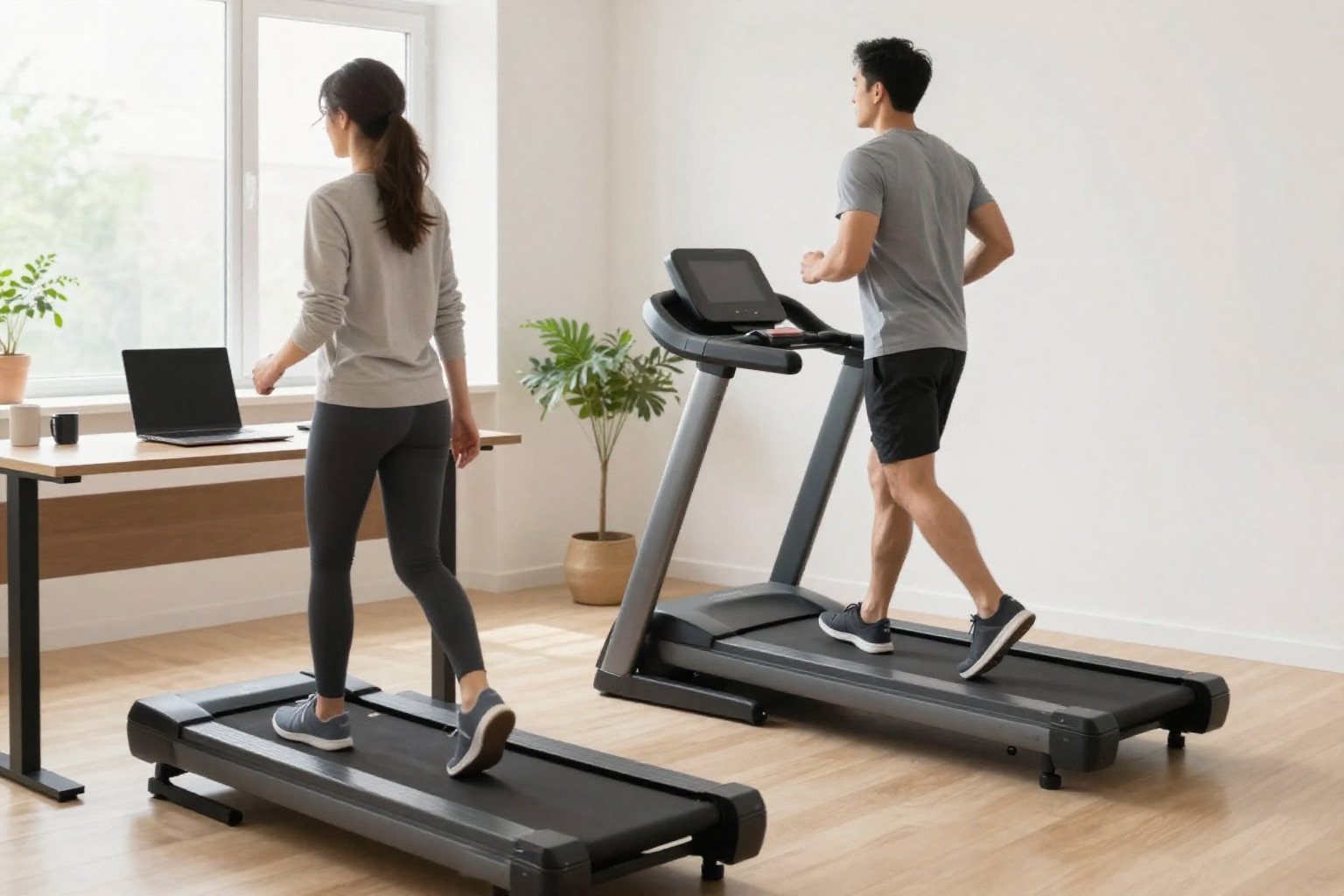
A walking pad is a flat, motorized belt built for walking, usually up to 3.8 to 4 mph with no handrail, that slides under a desk or a sofa. A treadmill has a console, side rails, a longer belt and a speed range that reaches running pace, typically 9 to 12 mph. If nobody in the house will run and you want it out of sight, a pad is the better buy; if anyone will jog, buy the treadmill. The details below settle the in-between cases.
Affiliate disclosureAs an Amazon Associate we earn from qualifying purchases made through links on this page. Commissions never change our ratings.
The short version, side by side
| Typical walking pad | Typical home treadmill | |
|---|---|---|
| Speed range | 0.6 to 3.8 mph (Yagud Walking Pad with Remote) | 0.5 to 12 mph (3G Cardio Pro Runner X) |
| Belt | about 40 x 16 in, often not stated | 50 to 60 in long, 16 to 22 in wide |
| Handrails | none, or one fold-up bar | two side rails and a console |
| Height in use | 3.5 to 6.2 in | a step-up of 6.5 in or more, plus rails |
| User weight | 220 to 450 lb, most 265 to 350 | 300 to 600 lb, most 300 to 400 |
| Footprint | 47.2 x 19.6 in (Yagud) | 79 x 36 in (NordicTrack manual) |
The middle ground exists: handrail pads such as the SereneLife Smart Incline Walking Pad (0.6 to 7.5 mph, per its listing) or the Sunny Health & Fitness Auto Incline Pad (up to 10 mph, 15 % incline). They are sold as walking pads, but they take the floor space of a small treadmill and they do not slide under a desk with the bar up.
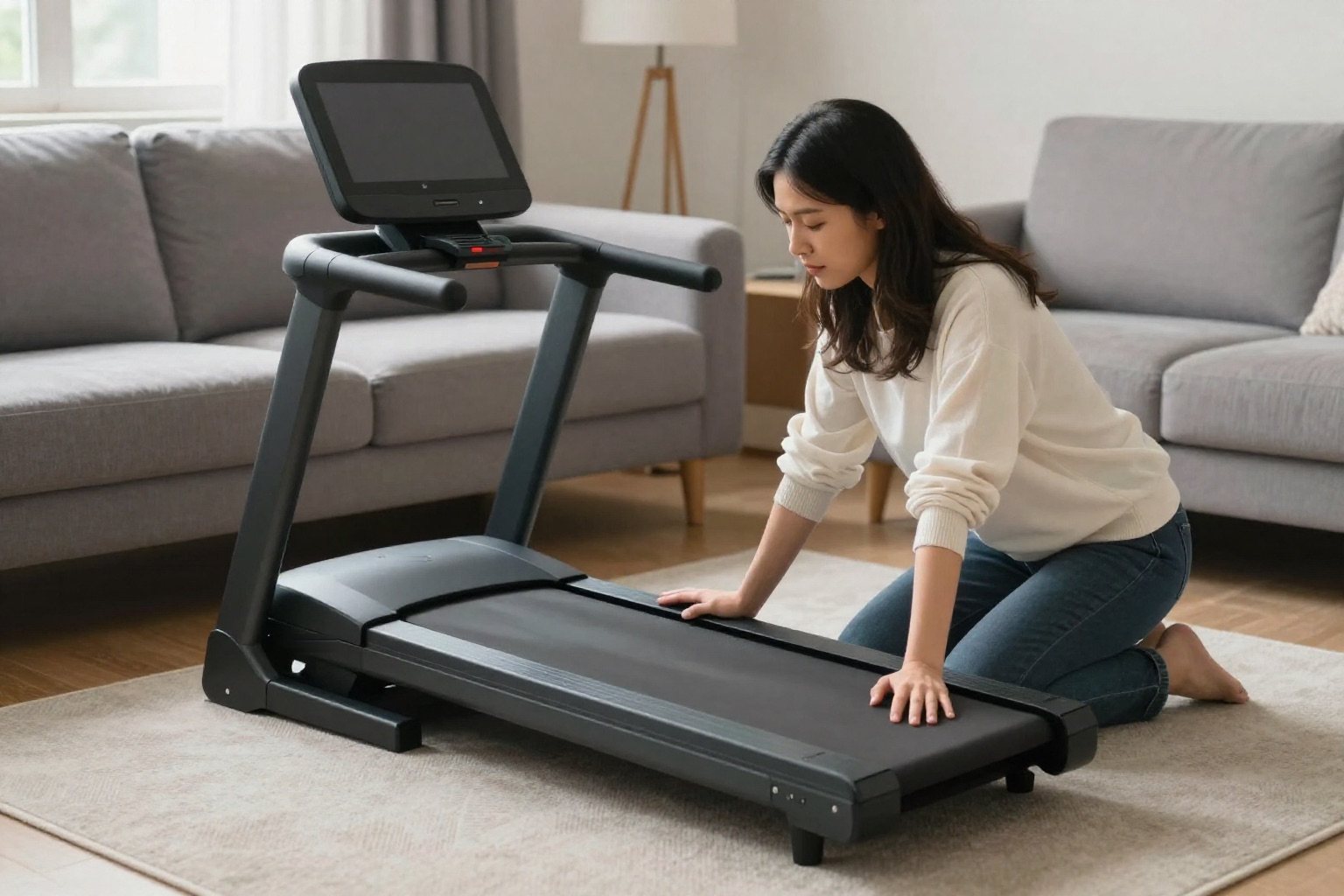
Speed: walking pace or running pace
This is the honest dividing line. Brisk walking sits at 3.5 to 3.9 mph in the 2024 Adult Compendium of Physical Activities; running starts around 4 to 5 mph and a 10-minute mile is 6 mph. A pad that stops at 3.8 mph covers a fast walk and nothing else. That is not a flaw: the CDC counts fast walking as moderate activity, and 150 minutes a week of it meets the adult guideline. If you want to jog even occasionally, though, you need a stated top speed of at least 6 to 8 mph, and our motor and speed guide explains why the motor figure follows the speed, not the other way round.
Belt size, rails and the desk question
SOLE suggests 18 x 48 in or larger for walking and 20 x 55 in or larger for jogging and running. Most walking pads are well below that. The SereneLife Smart Incline Walking Pad lists a 39.37 x 15.75 in belt; the Sunny Health & Fitness Auto Incline Pad is the exception at 20 x 53 in. At a slow desk pace a short belt is fine. At a long walking stride it starts to feel like a tightrope. Our belt size guide has the full table.
Rails are the other half. A pad with nothing to hold is perfect under a standing desk and a poor choice for anyone whose balance is not what it was; our treadmills for seniors guide usually lands on a full treadmill for that reason. If the pad is going under a desk, read our standing desk for walking pad guide first: the desk has to rise by the height of the pad.
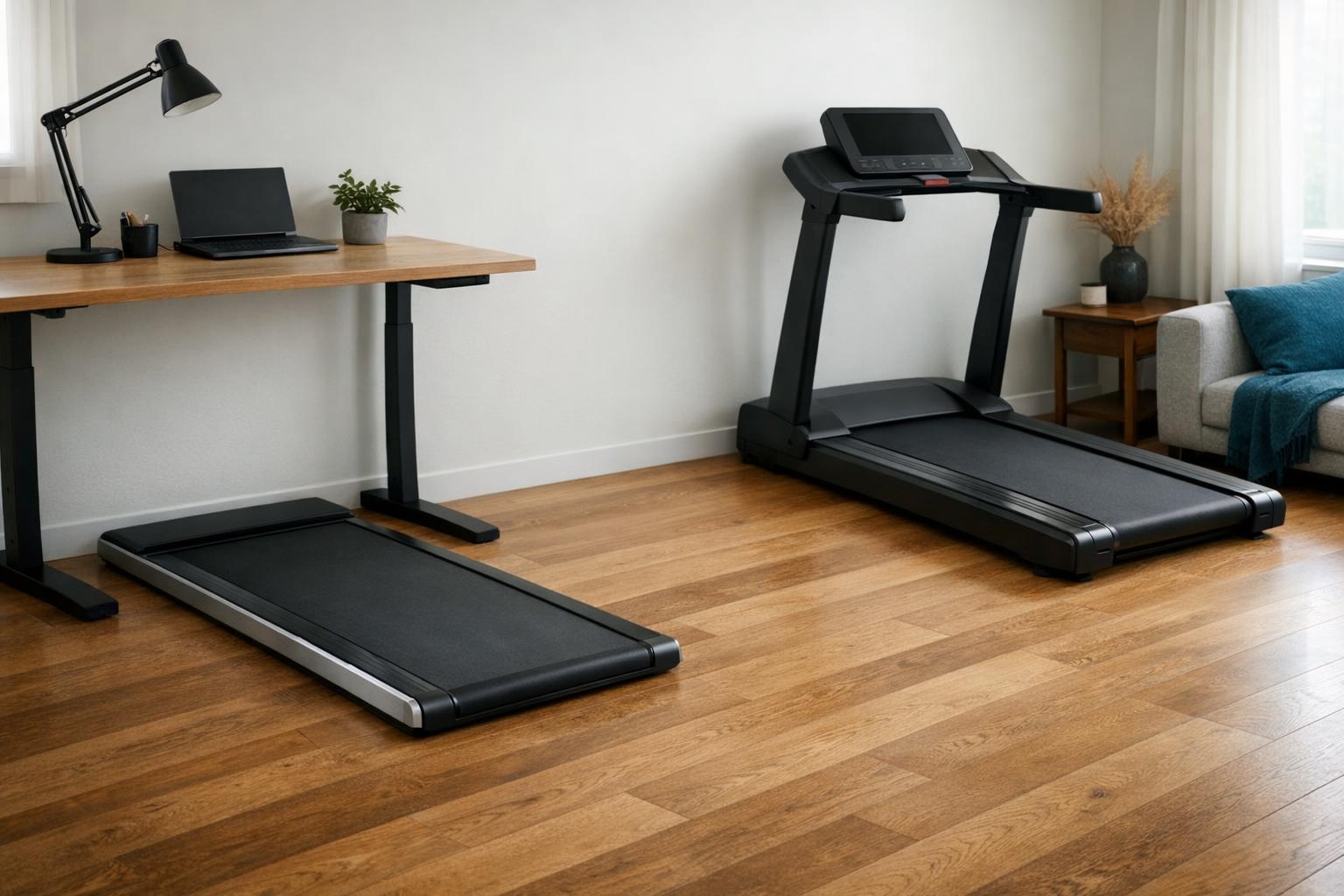
Weight limit, floor space and storage
Compact units state lower limits. The Yagud Walking Pad with Remote lists 220 lb, the SereneLife Smart Incline Walking Pad 265 lb, the Sunny Health & Fitness Auto Incline Pad 300 lb, while the MERACH 15/18% Auto Incline Treadmill and the 3G Cardio Pro Runner X list 350 lb. Leave headroom above the heaviest user; our weight capacity guide explains why.
Floor space is where a pad wins outright. A NordicTrack manual we read gives a 79 x 36 in footprint and asks for 8 ft free behind the deck and 2 ft on each side while it runs. A flat pad needs clear floor behind it too, but it stores flat under a bed, and many pads arrive assembled: the Sunny pad’s listing describes raising and locking the handlebar and walking. A full treadmill typically means two people, a heavy carton and a long evening with a hex key.
Which one to buy from our rankings
- Under a standing desk, walking only: Yagud Walking Pad with Remote (8.7/10): flat, 4.6 in high, 0.6 to 3.8 mph and a remote, according to the listing.
- A pad you can also walk hard on, with a rail: Sunny Health & Fitness Auto Incline Pad (9.5/10), #1 in our under-desk walking pad ranking.
- Running, or several users: NordicTrack T Series 10 (9.4/10), #1 in our best home treadmills ranking, lists 12 mph and 12 % incline and folds.
Keep the two shortlists apart when you compare prices. A pad and a running treadmill are different tools, not cheap and expensive versions of the same thing.
Our rated picks
The three best-rated models of our best under-desk walking pads ranking, from the buyer review record and the listed specs.


Product images: Amazon listings
Frequently asked questions
What is the difference between a walking pad and a treadmill?
A walking pad is a flat, low belt for walking, usually up to about 4 mph and without rails. A treadmill has side rails, a console, a longer belt and a speed range up to 9 to 12 mph for running.
Is a walking pad as good as a treadmill?
For walking, yes: fast walking counts as moderate activity, and 150 minutes a week meets the CDC guideline. For jogging, running or steep incline work, a treadmill is the right tool.
Can you run on a walking pad?
Only on handrail models that state a running speed, such as 7.5 or 10 mph. Flat under-desk pads usually stop around 3.8 to 4 mph and have a short belt.
Walking pad or treadmill: which is better for a small apartment?
A walking pad, if the users only walk: it stores flat and often arrives assembled. Leave clear floor behind it while it runs, as the manual asks.
Sources
- 2024 Adult Compendium of Physical Activities — Walking (MET values) (consulted Nov 2026)
- 2024 Adult Compendium of Physical Activities — Running (MET values) (consulted Nov 2026)
- U.S. Centers for Disease Control and Prevention — Adult Activity: An Overview (consulted Nov 2026)
- U.S. Centers for Disease Control and Prevention — What Counts as Physical Activity for Adults (consulted Nov 2026)
- SOLE Fitness — Treadmill Running Belt Size Guide (consulted Nov 2026)
- NordicTrack (ICON Health & Fitness) — User’s Manual, treadmill model NTL16129.4 (consulted Nov 2026)
Products mentioned
- Sunny Health & Fitness Auto Incline Treadmill, Fully Assembled Walking Pad (exact listing)
- Yagud Walking Pad Treadmill for Home Office, Portable Under Desk Treadmill with Remote Control and LED Display, Walking Jogging Running Machine for Home (exact listing)
- SereneLife Foldable Treadmill with Handrail | 3.5 HP Smart Incline Walking Pad Compatible with Fitshow, Kinomap & Zwift | Bluetooth | 4-Level Incline & Shock-Absorbing Belt | Supports up to 265 lbs (exact listing)
- NordicTrack T Series 10 Treadmill (exact listing)