Choosing a Home Treadmill: Start With the Floor
How to choose a home treadmill: speed range, belt size, user weight, floor space and power supply checked in the order that avoids the costly mistakes.

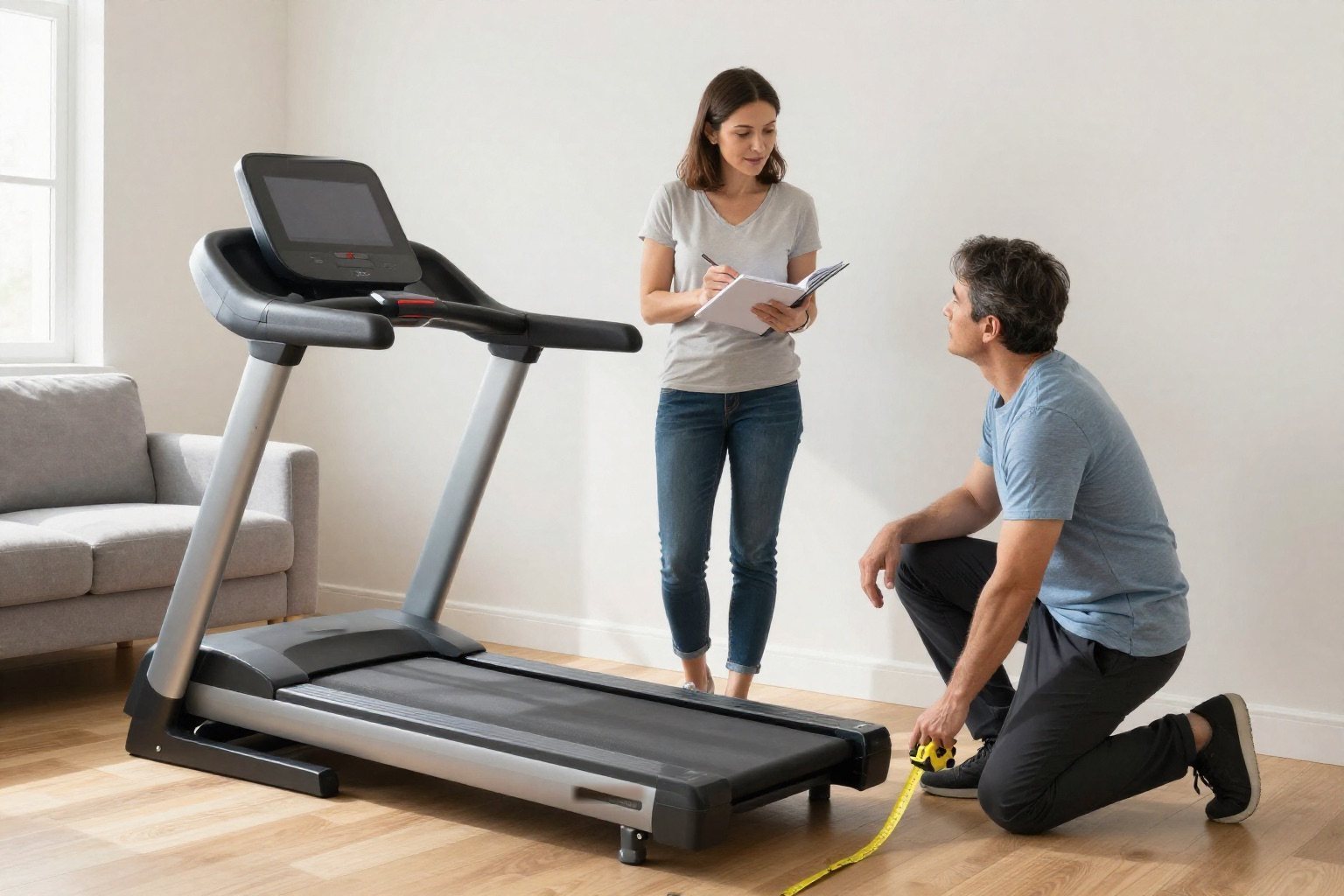
To choose a home treadmill, decide first how you will use it (walking, jogging or running, and who), then check five numbers in the listing in this order: top speed, belt size, user weight limit, the footprint plus clearance, and the power supply the manual asks for. A walker needs 4 mph and an 18 x 48 in belt; a runner needs 10 to 12 mph and 20 x 55 in or more. Everything else, screens and apps included, comes after.
Affiliate disclosureAs an Amazon Associate we earn from qualifying purchases made through links on this page. Commissions never change our ratings.
Decide how you will use it
Most expensive mistakes are made before the box arrives: a belt too short for a runner’s stride, a top speed that ends mid-interval, or a machine that takes half the spare room. Write down three things before you open a listing: walk, jog or run; how many people, and how tall and heavy the biggest one is; and where it will stand.
For most people the target is simple. The CDC asks adults for 150 minutes of moderate activity a week, and fast walking counts. If that is the plan, an incline walker or even a walking pad does the job, and our treadmills for seniors guide covers the case of a parent who mainly needs something to hold.
Speed range and belt size
Speed is the first filter. Brisk walking is 3.5 to 3.9 mph in the 2024 Compendium of Physical Activities; a 10-minute mile is 6 mph. A walker is covered by 4 mph, a jogger by 8 to 9, a runner wants 10 to 12. The NordicTrack T Series 10 lists 12 mph and 12 % incline; the Sunny Health & Fitness 12% Wi-Fi lists 9 mph. Our motor and speed guide explains why the motor figure follows from this.
Then the belt. SOLE suggests 18 x 48 in or larger for walking and 20 x 55 in or more for running, 22 in wide for anyone over 6 ft. The Sunny 12 % model lists 16 x 50 in, the 3G Cardio Pro Runner X 20.5 x 58 in. If the listing gives no belt size, read the manual before you order. The belt size guide has the full table.
User weight and frame
The maximum user weight is the maker’s limit for the frame, deck and drive. Manuals are blunt about it: NordicTrack says 300 lb for the model we read, Schwinn 275 lb for the 810, and Schwinn’s warranty excludes damage caused by going over it. Choose a limit with real headroom above the heaviest user, and read it next to the machine weight: the MERACH 15/18% Auto Incline Treadmill lists 350 lb for the user and 122 lb for the machine, the 3G Cardio 350 lb and 216 lb. Our weight capacity guide explains why the pair matters.
Measure the floor, then the ceiling
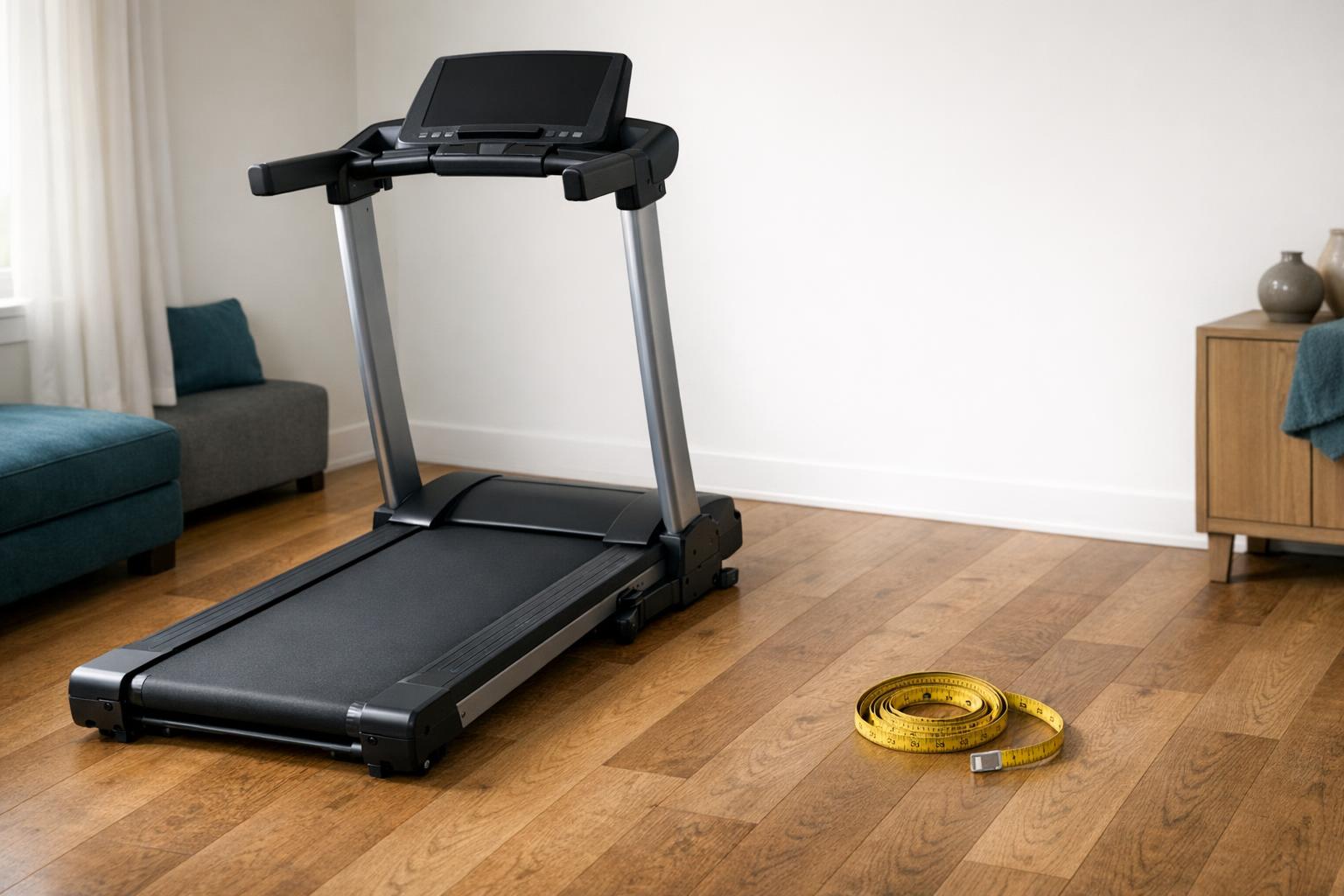
A treadmill needs its footprint plus free floor while it runs: 2 m behind and 0.5 m each side in the Schwinn manual, 8 ft and 2 ft in the NordicTrack manual. For a 79 x 36 in machine that is about 14.5 x 7 ft of floor. Then add your height to the deck height at full incline and compare that with the ceiling. Folding saves storage space, not running space. The space and clearance guide and our treadmill space planner do this arithmetic for you.
Power supply, subscriptions and our picks
Check the outlet before the screen. The Schwinn manual asks for a dedicated 15 A circuit at 110 V; the NordicTrack manual for a 120 V circuit of 15 A or more and a surge suppressor. Anything beyond an outlet you already have is a question for a licensed electrician. Then read the subscription small print: the NordicTrack listing says many console features need an iFIT membership, the 3G Cardio listing says none is required. Neither is better, but the monthly cost belongs in your comparison.
- All-rounder that runs and folds: NordicTrack T Series 10 (9.4/10), #1 in our best home treadmills ranking.
- Walkers who want incline without a subscription screen: Sunny Health & Fitness 12% Wi-Fi (9.4/10), 9 mph, 12 %, 300 lb.
- Heavier users who walk on a grade: MERACH 15/18% Auto Incline Treadmill, 350 lb and 18 % per its listing.
Our rated picks
The three best-rated models of our best home treadmills ranking, from the buyer review record and the listed specs.

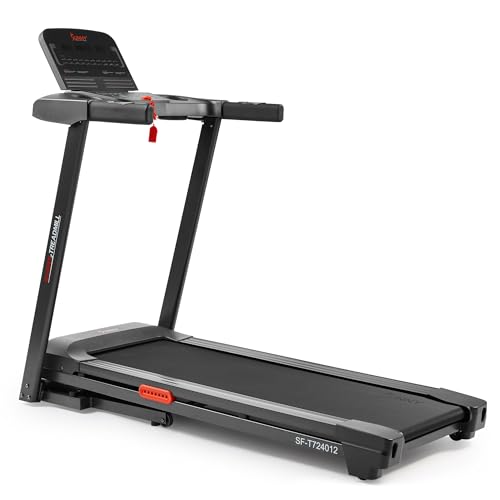

Product images: Amazon listings
Frequently asked questions
What should I look for when buying a treadmill for home?
In this order: the top speed you need, a belt of at least 18 x 48 in for walking or 20 x 55 in for running, a user weight limit with headroom, enough floor for the footprint plus clearance, and the power supply the manual asks for.
How fast should a home treadmill go?
About 4 mph covers brisk walking, 8 to 9 mph jogging and 10 to 12 mph regular running. Buy for the fastest regular user.
Is a walking pad enough instead of a treadmill?
If everyone only walks and space is tight, yes. If anyone jogs, wants steep incline or needs side rails for balance, buy a treadmill.
Do home treadmills need a special outlet?
Many run on a household outlet, but manuals often ask for a dedicated 15 A circuit and a grounded outlet. Check the manual of your exact model and ask an electrician if your circuit does not match.
Sources
- U.S. Centers for Disease Control and Prevention — Adult Activity: An Overview (consulted Nov 2026)
- 2024 Adult Compendium of Physical Activities — Walking (MET values) (consulted Nov 2026)
- SOLE Fitness — Treadmill Running Belt Size Guide (consulted Nov 2026)
- Schwinn (Nautilus, Inc.) — 810 / 510T treadmill: Assembly Manual / Owner’s Manual (consulted Nov 2026)
- NordicTrack (ICON Health & Fitness) — User’s Manual, treadmill model NTL16129.4 (consulted Nov 2026)
Products mentioned
- NordicTrack T Series 10 Treadmill (exact listing)
- Sunny Health & Fitness Foldable 12% Auto Incline Wi-Fi Treadmill (exact listing)
- MERACH Treadmill with 15/18% Auto Incline, 55"/47"x18"/19" Wide Belt Treadmills, 0.5-8.7MPH/10MPH 3.5HP Brushless Incline Treadmill for Home, 350LBS Foldable Treadmills with Screen & APP & Heart Rate (exact listing)
- 3G Cardio Pro Runner X Treadmill - Heavy Duty Home Construction - FreeSync FTMS Bluetooth Connectivity - Low 6.5" Step-up Height - Foldable Compact Storage - Orthopedic Belt - 350 lb Capacity (exact listing)